Sophie's World

Sophie’s World

I give this book: 5 STARS
*****

Sophie's World

A Novel about the History of Philosophy
by Jostein Gaarder

A passionate plea to rediscover our capacity for amazement, Sophie’s World is more than a mere mystery. It is also the first novel to present a complete–and entertaining–history of philosophy.
Long and dense, this novel, a bestseller in the author’s native Norway, offers a summary history of philosophy embedded in a philosophical mystery disguised as a children’s book-but only sophisticated young adults would be remotely interested.

Sophie, a young teenager, meets a philosopher who makes her his apprentice and teaches her the history of the world’s greatest thinkers, and together they discover things about the life they’re living and the world they live in, and must now find how to make the changes they need in order to survive.
Read Sophie’s World and experience a journey through worlds within worlds. [..more..]

The Second Harvest Festival

Merry Mabon Everyone!!

As the season of autumn rolls in, keep a watchful eye on nature as she begins her big show of the year with all the blazing autumn colors. The faeries of the fall are busy now, adding color to the landscape, coaxing the last of the flowers to bloom, and painting dewdrops on the morning grass. Leave out a small saucer of milk on a fine autumn evening in gratitude for all the nature spirit’s hard a work as the harvest is gathered.

In agrarian times, the solar event known as Mabon was regarded as a harvest festival to prepare the second of crops for the looming winter months – a time to complete the harvest that began at Lammas.
In terms of the cycle of day and night, Mabon represents sunset, as the Sun retreats and night begins to dominate. Accordingly, contemporary Witches decorate their altars with autumn leaves, pine cones and acorns along with nuts and dried fruits as offerings to Goddess. As a time of balance, make time for introspection. Reflect on your deeds
and celebrate your achievements as the proverbial “fruits of your labor”. Think about initiating closure on issues or tasks that are taking a long time to complete, or removing things that no longer serve a purpose.
Traditionally, Mabon is a time to ease the transition from warmth and abundance to the harshness of winter. Whilst the weather is still mild, wash and air your warmer bedding to prepare for ultimate comfort in the weeks ahead. Do the same for your favorite coats and sweaters. You will feel totally organized and ready for the cooler, yet cozy part of the year! –by Emely Flak

Courtesy of Llewellyn Worldwide

~ ~ ~
Mabon is a time of harvest and of celebration. For more about this magickal holiday, recipes for food and incense, activities and more Click Here
For a Harvest and Mabon Ritual Click Here

Mabon Wine Recipe

Blackberry Wine
Recipe by Edain McCoy

What you need:
– 2 & 1/2 pounds fresh Blackberries
– 3 cups Sugar
– 2 cups Hot Water

What to do:
– Let the berries set out in a large bowl for about four weeks, stirring them occasionally. The berries will get a rank smell and may begin to mold.
– With mortar and pestle, crush the berries into as smooth a pulp as possible. Stir in the sugar and then the water.
– Pour the wine into casks to ferment for eight to ten months. The longer it is kept the better it will be. The wine will have to be aired every few days to allow building gases to escape.
This wine has a gentle port-like flavor when finished.

Source: This ‘Blackberry Wine’ recipe is from “Witta: An Irish Pagan Tradition” by Edain McCoy, Llewellyn Publications, 1994

Glossary

-A-

ABHAYAM: Fearless.
ABHIMANA: Egoism, identification with the body.
ABHYASA: Spiritual practice.
ADHIKARI: A qualified person.
ADHISHTHANA: Substratum, support.
ADHYASA: Superimposition or false attribution of properties of one thing on another thing.
ADHYATMIC: Spiritual.
ADHYAYANA: Study.
ADVAITA: Non-duality.
AGRAHYA: Unknowable.
AHANKARA: Egoism.
AHIMSA: Non-injury in thought, word and deed. Click here for a more detailed explanation.
AISVARYA: Divine powers.
AJARAM: Without old age.
ALABDHABHUMIKATVA: The feeling that it is impossible to see reality.
ALASYA: Laziness.
AMARA: Immortal.
AMARA-PURUSHA: Immortal being.
AMRITAM: Immortal.
ANADI: Beginningless.
ANAHATA: Mystic sound heard by Yogis.
ANANDA: Bliss, happiness, joy.
ANANDA-GHANA: Cloud of bliss.
ANANDA-SVARUPA: Of the form of bliss.
ANANDAMAYA: Full of great happiness.
ANTAHKARANA: Internal instrument such as mind, intellect, ego and the subconscious mind.
ANANTAM: Infinity.
ANTARATMAN: Inner Self.
ANTARYAMIN: Inner witness.
ANUBHAVA: Experience.
APTA: Realized.
ARHATA: A perfected Soul.
ASAMPRAJNATA: Highest superconscious state where the mind is completely annihilated and Reality experienced.
ASANA: A bodily pose or posture.
ASHRAM: A hermitage; monastery.
ASHTANGA: Eight limbs. Click here for a discourse on Raja Yoga / Ashtanga Yoga.
ASURIC: Demoniacal.
ATMA-JNANA: Knowledge of the Self.
ATMA-SVARUP: The essential nature of the Self.
ATMAN: The Self.
AVADHUTA: A naked sage.
AVARANA: Veil of ignorance.
AVIDYA: Ignorance.
AYURVEDA: The ancient Indian science of medicine.

-B-

BENARES: A holy pilgrimage centre of Hindus, now called Varanasi in Uttar Pradesh, India.
BHAGAVAD-GITA: A scripture containing Lord Krishna’s teachings. Click here to view an online version.
BHAGAVATA: Name of a Purana (sacred work dealing with the doctrines of creation, etc.)
BHAJAN: Devotional song
BHAKTA: Devotee of God
BHAKTI: Devotion.
BHARATAVARSHA: India.
BHAVA(NA): Feeling; mental attitude.
BHAYANAKA-SABDA: A fear inducing sound.
BHOGI: Enjoyer.
BHUMA: The Unconditioned, the Great Infinite, Brahman.
BHUTA-SIDDHI: A psychic power by which mastery is gained over the elements.
BODHISATTVA: A being who, having developed the Awakening Mind (a mind infused with the aspiration to attain the state of Buddhahood), devotes his life to the task of achieving Buddhahood for the sake of all sentient beings.
BRAHMA-CHINTANA: Constant thinking of Brahman.
BRAHMA-JNANA: Direct Knowledge of Brahman.
BRAHMA-NISHTHA: One who is established in the Knowledge of Brahman.
BRAHMA-SROTRI: One who has knowledge of the Vedas and the Upanishads.
BRAHMA-SUTRAS: Classical Vedantic scripture.
BRAHMA-TEJAS: Spiritual halo.
BRAHMA-VIDYA: The science of Brahman, knowledge of Brahman, learning pertaining to Brahman or the Absolute Reality. Click here for an essay on Brahma Vidya.
BRAHMACHARYA: Practice of celibacy. Purity in thought, word and deed. Click here for a discourse on Brahmacharya.
BRAHMAMUHURTA: Period from 4 a.m. to 6 a.m.
BRAHMAN: The Absolute Reality; God.
BRIHADARANYAKA: Name of an Upanishad.
BUDDHA: One who is totally purified from all defilements and who has realized all that can be known.
BUDDHI: Intellect.

-C-

CHAITANYA: Pure Consciousness.
CHAKRAS: Centres of energy in the human system.
CHANDOGYA: Name of an Upanishad.
CHELA: Disciple.
CHIRANJIVI: One who has gained eternal life.
CHITTA: Subconscious mind.

-D-

DAIVIC: Divine.
DAMA: Control of senses.
DARSHAN: Vision.
DAYA: Mercy.
DEHA: Body.
DEVAS: Celestial beings.
DHARANA: Concentration.
DHARMA: Righteous way of living as enjoined by the sacred scriptures, virtue.
DHYANA: Meditation.
DIVYA-DRISHTI: Divine perception.
DVESHA: Repulsion; hatred; dislike.

-E-

EKADASI: Eleventh day of the Hindu lunar fortnight. Click here for a discourse on the significance of Ekadasi.

-G-

GANDHA: Smell.
GANGA: River Ganges.
GAYATRI: One of the most sacred Vedic Mantras; goddess.
GITA: Renowned sacred text “Bhagavad-Gita”. Click here to view an online version.
GUNA: Quality born of nature.
GURU: Teacher; preceptor. Click here for a more detailed explanation.

-H-

HAVAN: Sacred oblations.
HIRANYAGARBHA: Cosmic intelligence; the supreme lord of the universe; cosmic mind.

-I-

INDRA: The Lord of gods; the ruler of heaven.
INDRIYAS: Senses.
ISHVARA: Lord; God.

-J-

JADA: Insentient.
JAPA: Repetition of the Lord’s Name.
JIVA: Individual Soul.
JIVANMUKTA: One who is liberated in this life.
JNANA: Knowledge; wisdom.
JNANA-INDRIYAS: Organs of knowledge or perception.
JNANI: (Pronounced Nyani) A wise person.

-K-

KAIVALYA: Emancipation; state of absolute independence.
KARMA: Actions operating through the law of cause and effect. Click here for a discourse on Karma Yoga.
KARMA-INDRIYAS: Organs of action – tongue, hands, feet, genital organ and anus.
KARMA-KANDI: One who observes strictly the duties ordained in the scriptures.
KARMASRAYA: Receptacle of actions.
KARUNA: Compassion
KASHAYA: Hidden desires.
KIRTAN: Singing devotional songs.
KRIYA: A type of of exercise in Hatha Yoga.
KSHAMA: Forgiveness.
KUNDALINI: The primordial cosmic energy located in the individual.
KUTIR: A small cottage; hut.

-L-

LAYA: Merging; dissolution.
LINGA-SARIRA: The subtle body, the astral body.
LOBHA: Greed.

-M-

MAHA: Great.
MAHABHARATA: A Hindu epic.
MAHANT: Great sage
MAHAPURUSHA: A great soul.
MAHARISHI: Great sage
MAHASAMADHI: The departure of a Self-realized saint from his mortal coil.
MAHATMA: Great soul
MAITRI: Friendship.
MANAS: Mind.
MANONASA: Destruction of mind.
MANTRA: Sacred syllable or word, or set of words through the repetition and reflection of which one attains perfection.
MAYA: The illusive power of God. Click here for a more thorough explanation.
MOHA: Infatuation.
MOKSHA: Liberation.
MOUNA: Vow of silence.
MOUNI: One who observes silence.
MUKTI: Liberation.
MUMUKSHU: One who aspires after moksha or liberation.
MUNI: An ascetic.
MURTI: Idol.

-N-

NADA: Mystic sound.
NIRODHA: Control or restraint.
NIRVANA: Liberation; final emancipation.
NIRVIKALPA-SAMADHI: Superconscious state where there is no modification of the mind or Triputi.
NITYA-SIDDHA: A liberated soul of marvellous powers who is ever present on the astral plane.
NIVRITTI: Renunciation.
NIYAMA: The second step in Raja Yoga; observance – purity, contentment, austerities, etc.

-O-

OJAS: Spiritual energy.
OM: The sacred monosyllable which symbolizes Brahman.
OORDHVARETA: A Yogi who has stored up the seminal energy in the brain after sublimating the same into spiritual energy.

-P-

PARIVRAJAKA: Wandering monk.
PARAM-DHAMA: Supreme abode.
PARAMAHAMSA: The highest class of Sannyasins.
PASU-SVABHAVA: Animal nature; bestial nature.
PATANJALI: The author of Yoga-Sutras. Click here for a discourse on Patanjali’s Raja Yoga / Ashtanga Yoga.
PRAKRITI: Mother Nature, causal matter.
PRANA: Vital energy; life-breath.
PRANAVA: The sacred monosyllable Om.
PRANAYAMA: Practice of breath-control.
PRATYAHARA: Abstraction of senses; fifth step in Raja Yoga.
PREM: Love.
PREMA: Divine Love.
PRITHVI: Earth.
PURANA: Hindu myths and legends.
PURNA-JNANI: A full-blown sage.
PURNA-YOGI: A full-blown yogi.
PURUSHA: The Supreme Being.

-R-

RAGA: Attachment.
RAJA: King.
RAJAS: One of the three qualities of Prakriti which generates passion and restlessness.
RAJA-YOGA: A system of Yoga generally taken to be the one propounded by Patanjali Maharishi, i.e., Ashtanga Yoga. Click here for a discourse on Raja Yoga/Ashtanga Yoga.
RAJASUYA-YAJNA: A sacrifice performed by a monarch as a mark of his subduing all other kings.
RAMAYANA: A holy narative of Lord Rama.
RASA: Taste.
RASASVADA: Tasting the bliss of lower Samadhi.
RISHI: Sage.
RISHIKESH: A sacred place in the Himalayas.
RUPA: Form.

-S-

SADHAKA: Spiritual aspirant.
SADHANA: Spiritual practice. Click here for a discourse on Sadhana.
SADHU: Pious man; Sannyasin.
SAGARA: Ocean.
SAHASRANAMA: The thousand Names of the Lord.
SAKSHI: Witness.
SAKTI: Power; the feminine aspect of Divinity.
SAKTI-SANCHAR: Transference of power by a developed Yogi.
SAMA: Serenity; control of mind.
SAMADHI: The state of superconsciousness where Absoluteness is experienced attended with all-knowledge and joy. Oneness.
SAMSARA: The process of worldly life.
SAMSKARAS: Impressions in the subconscious mind.
SAMYAMA: Perfect restraint, an all-complete condition of balance and repose, concentration, meditation and Samadhi.
SANKARA: The well known teacher of Vedanta philosophy. Click here for a biography.
SANKIRTAN: Singing of divine songs.
SANNYASINS: Those who have embraced the life of complete renunciation.
SATCHIDANANDA: Existence absolute(Sat), Knowledge absolute(Chid), Bliss absolute(Ananda).
SATSANG: Association with the wise.
SATTVA: Purity-one of the three qualities of nature.
SATYA-YUGA: the Age of Truth, the first of the four Hindu time-cycles.
SHABDA: Sound.
SIDDHI: Psychic power.
SIVA: Lord Siva – bestower of auspiciousness on His devotees.
SLOKA: Verse.
SPARSA: Touch.
SRADDHA: Faith.
SRI: Auspiciousness-a name is qualified by putting “Sri” before it as a mark of courtesy and auspiciousness.
STOTRA: Hymn.
SUDDHA: Pure.
SUKHA: Happiness.
SUSHUMNA: The chief among astral tubes in the human body running inside the spinal column.
SUTRA: Aphorism.
SVADHYAYA: Study of scriptures.
SVARUPA: Essential nature; Reality.

-T-

TAMAS: One of the three qualities of nature which generates inertia, laziness, dullness and infatuation.
TANMATRA: Subtle, undifferentiated root elements of matter.
TAPAS: Austerity.
TAPASCHARYA: Practice of austerity.
TATTVA: Essence; principle.
TEHSILDAR: Revenue officer.
TRIPUTI: The triad-seer, sight and seen.
TRISHNA: Sense-hankering.
TURIYA: The state of superconsciousness, the fourth state transcending the waking, dreaming and deep sleep states.
TYAGA: Renunciation (of egoism, desires and the world).

-U-

UDDALAKA: A great sage of yore.
UPADESA: Spiritual advice.
UPANISHADS: Revelation; text dealing with Ultimate Truth and Its Realization.

-V-

VAIRAGYA: Dispassion.
VASANA-KSHYA: Desireless.
VASANAS: Subtle desires.
VASTU: Article.
VEDANTA: The school of Hindu thoughts (based primarily on the Upanishads).
VEDANTIN: One who follows the path of Vedanta
VEDAS: The most ancient authentic scripture of the Hindus, a revealed scripture and therefore free from imperfections.
VEERYA: Seminal energy.
VETTA: Knower.
VICHARA: Enquiry into the nature of the Self, Truth, Absolute, Brahman.
VIGRAHA: Attack.
VIKSHEPA: The tossing of mind.
VISHAYA: Sense-objects.
VIVEKA: Discrimination.
VRITTI: A wave in the mind-lake.
VYAVAHARA: (Worldly) activity.

-Y-

YAJNAVALKYA: A great sage of yore.
YAMA: First step in Raja Yoga; Eternal vows – non-violence, truthfulness, etc.
YOGA: Union; union with the Supreme Being – any course that makes for such union. Click here for a discourse on Yoga.
YOGI (N): One who practices Yoga; one who is established in Yoga.
YONI: Source.

-Z-

ZAMINDAR: A rich landlord.

overcome depression

Overcome Depression

Natural Treatment for Clinical Depression

overcome depression

One of the byproducts of our contemporary isolated life is depression. Depression can have devastating effects on our mind and body, the activities that we used to enjoy with friends and family could become lifeless.

Taking anti-depressants such as Prozac can be a mental and physical roller coaster. There are three problems with the anti-depressant drugs currently available on the market.

First, they fail to correct the behaviors that contribute to depression, or even show direction towards behavioral modifications, so the disorder recurs. Second, they do not improve the body’s own mechanisms for rectifying such disorders; rather, they temporarily force a change that gives symptomatic relief. Third, for some the severe side effects of these drugs can create major implications.

Worse yet, studies show for many people there are no drugs that can help. It is truly sad to hear about how many people commit suicide even when they are taking drugs regularly. Below you will find four natural ways to overcome depression without the use of any drugs.

shift the brain

1. Simple Brain Shift

One of the best techniques neuroscience research and brain mapping have developed is Brainswitching. Brainswitching is a power cognitive behavioral therapy that can be just as effective as anti-depressants.

Depression exists in the emotional part of the brain. Brainswitching uses basic mental exercises to switch the neuronal activity from the emotional part of the brain (the subcortex) to the thinking part of the brain (the neocortex) which does not have the capacity for depression.

Here’s an example of Brainswitching that you can try for yourself. Lets say you find yourself being depressed, instead of thinking “I am so down and depressed” make yourself busy with some trivial logical exercises or games. At such a time you can play games that involve logical thinking (chess, soduku, online puzzles, etc) or simply close your eyes and in your mind start singing your favorite song with full concentration. Refuse to think that you are depressed.

Concentrating your mind on some thought or song will block the cognitive awareness of the depression going on in the subcortex, the emotional part of your brain. This technique will increase the neuronal activity in the neocortex and decrease it in the subcortex, thus correcting the chemical imbalance that feeds depression.

omega 3

2. Omega-3 fatty acids

Omega-3’s aid in the brain’s neuron connectivity and are important components of nerve cell membranes. People who do not get enough omega-3 fatty acids in their diet may be at an increased risk for depression. They help nerve cells communicate with each other, which is a vital step in maintaining good mental health.

Studies show that people who ate a healthy diet consisting of fatty fish 2-to-3 times per week for 5 years experienced a significant reduction in feelings of depression and hostility. If fish is not a regular part of your diet you can also take omega 3 fatty acids in a vitamin pill form (1000mg daily dosage).

Omega-3 Fatty acids are not only helpful for overcoming depression, but they are also used as treatment in diabetes, Attention Deficit/Hyperactivity Disorder, High Blood Pressure, Arthritis, and many more.

aerobics

3. Aerobic Exercise

“A lot of what passes for depression these days is nothing more than a body saying that it needs work.” – Geoffrey Norman

“Scientists recently discovered that exercise is as effective in fighting depression as Prozac and Xanax. Ask your doctor if getting off your ass is right for you.” – Bill Maher

Exercise and fresh air play a big part in keeping depression and mood swings at bay. By aiming to get outside and jogging at least three times a week for half an hour at a time helps you clear your hear, think straight and aids concentration. It also gives you that ‘runner’s high’ by releasing your endorphins that can instantly cheer you up.

Exercising is a good way to work through and release stress as well. It does not have to be fast paced jogging or running, just get your heart rate up to120 to 160 beats per minute depending on your age and condition.

Now an expanding body of research shows that exercise can improve the performance of the brain by boosting memory and cognitive processing speed. Exercise can, in fact, create a stronger, faster brain. This is possible because researchers believe that exercise can help the brain produce more seratonin which could prompt new neurons to grow. Low levels of seratonin have been associated with clinical depression.

Most antidepressant medications, such as Prozac, enhance the effectiveness of serotonin. Interestingly, these drugs take three to four weeks to begin working — about the same time required for new neurons to form and mature. So the reason these drugs could be effective during depression is because they increase neurogenesis. Just as exercise does.

sleep

4. Sleep

Improper sleeping patterns are both the cause and consequence of depression. So why does depression cause insomnia? The answer lies in the fact that people suffering from depression have a difficult time controlling the different mood and sleep hormones. The hormones you need to improve mood and energy are not the same ones you need to help you sleep.

Our body needs serotonin to be active and energetic during the day, and it needs melatonin to help us pull back and sleep. So if the body starts producing melatonin in the daytime it can cause us to feel dull, unstable, irritable and moody. Oftentimes, depression is the result of your body producing the wrong hormones at the wrong time of day.

This imbalance in the body clock can be caused from lack of sleep, stress, trauma, lack of light, or number of other factors. In scientific terms this is referred to as the Circadian Rhythm Disorder. Medical journals now report that depression is closely tied to circadian rhythm disorders. Being out in the sunlight for 30 minutes a day helps keep your internal body clock set. This daily rhythm helps to regulate our sleep/wake cycle and insures a good night’s sleep that helps our mental and physical health.

In addition to going out in the sun light here are some good sleeping habits you can follow to readjust the body clock.

No activities before going to sleep – You should strictly avoid adrenaline before going to sleep. Stay away from anything that is exciting or stressful and yes that includes exercise, TV, or even reading before going to sleep.

Follow a steady sleep routine – Try going to bed at the same time every night. We all know how working in shifts and jet-lag affect sleep: do not emulate them by going to bed at random times each day!

Go to bed early – By going to bed early you wake up naturally instead of being forced by an alarm clock, and it also prevents you from being out of sync with the solar cycle. Going to bed early allows your body to slow crash down and fall asleep.

Only use your bedroom for sleeping – Dedicate a seperate room for sleeping where you don’t do any work or stressful activities. This subconciously tells your body this is the place to sleep and your body slowly forms a habit of it.

Conclusion

Turn these tips in to a routine like brushing your teeth, so that they become a part of your daily life. You don’t think about them, you just do them!

If you take these natural steps everyday it can be very effective in overcoming depression. In fact, studies have shown these to be as effective (or even more so) than traditional therapies. Incorporating these natural steps in your daily life will not only help you overcome depression but also improve the general quality of your life.

Courtesy of Depression Treatment Center

Hot Summer Days

Summer has arrived, and the hot and sweaty days are great to help the body remove toxins and cleanse itself of impurities. Have you noticed that we tend to eat less in summer? The hot energy of the body is definitely stronger during the summer keeping the body vital and energized, needing less food. During the cold winter days the body uses the energy of the food we ingest to create more vital energy to store. So let’s welcome the natural purification process and enjoy the Sun’s vitality.
Have you ever wondered where the old saying: dog days of summer comes from? .. well these hot days from early July through August and part of September are named after the “Dog Star”, Sirius. During the first 5 days of the month of July Sirius rises in the sky and sets in conjunction with the majestic Sun, astronomers call this phenomenon “helical”, which comes from Helios –rising and setting.
Since the ancient times of Egypt, Sirius has been known as the Nile Star or Star of Isis. About 5,000 years ago the rising of such star marked the flooding of the Nile River. The story indicates that the statue of Isis, at the Dendera temple, had a precious jewel in her forehead, and when the light of the Star of Sirius hit the jewel, the flooding began.
The etymology of the word Sirius may originate from various places: the Egyptian word sihor, which means Nile, or from the Greek word seirios, which translates scorching. The Romans knew it as Canicula, because the location of this star is in the constellation Canis Major, which could translate “the big dog”. To the Romans, the hot energy-waves of this phenomenon drove men and dogs mad, and called these blazing hot days caniculares. In the sixteenth century the translation of this Latin word to English was “dog days”.
The Sirius star has become a big part of the history of the Cosmos. It is one of the brightest stars in the sky and can be easily seen with the naked eye. To the Norse it was known as Loki’s Brand. The Dogon tribe, in Africa, believe Sirius B (the small companion of the larger Sirius A) to be the navel of the Universe and home to the mysterious race known as the Nommo.

The Pleiades, a cluster of seven stars found in the Taurean constellation also show themselves during these dog days of summer, just ahead of the Sun, when we look towards the east-norht-east horizon. This group of stars is only one million years old, when our precious dinosaurs walked the green Earth. To the Greek the Pleiades were known as the Seven Sisters: Alcyone, Asterope, Celaeno, Dryope (also Merope or Aero), Electra, Maia, Taygete. Daughters of Pleione and Atlas, the Titan who held the world. This is what has given them the name Atlantides. The story says that one beautiful day, the hunter Orion saw Pleiades walking the countryside and mesmerized by their glow wanted them for himself. For seven years he tried to win them over, until Zeus turned them into stars, as they have so persistently asked for.
In some cultures, the appearance of these stars signaled the beginning of the new year. To the Vikings, the Pleiades were known as Freya’s Hens, to the Maori they were known as the Mataariki, to the Australian they are the Makara, and to the Japanese they are the Subaru … which is the reason why the world known car company uses them in their logo.
To the Native American, as well as the Greeks, the Pleiades were also known to be a vision test, the number of stars you could see determined the sharpness of your eyesight.

Yin and You: An opportunity for exploration

by Rachael Kennedy and Kim Keller

Tantric breathing

Breath is core to accessing the energy centers in our body. Following this three-step process, set aside 10-15 minutes to practice Tantric breathing, and notice the energetic effects you feel on your physical body.

Step One: Find a comfortable upright position (lying down can tempt you to fall asleep instead of finding focus). Place your attention on your pelvic floor as it rests in the chair or on the ground.

Step Two: Imagine there is a live wire of electricity running from your tail bone up your spine, out the top of your head, wrapping back down the front of your body, returning to your tail bone and back up your spine, creating a complete “circuit” of energy. As you inhale, the energy runs up your spine, and as you exhale the energy runs down the front of your body. Once you have this breathing motion moving smoothly and consistently, move to step three.

Step Three: With each inhale tighten your vaginal muscles. On the exhale, release those muscles. Continue contracting and releasing these muscles with each breath.

Practice this breathing pattern along with the muscle contraction and release for 5 minutes. If this exercise seems easy you may wish to expand your practice time to 10 or 15 minutes. However, this breathing can really “charge you up,” and if this is a new practice for you, be cautious not to overload your system. Practice gently, and notice the feelings you experience throughout the rest of your body — before, during and after the exercise.

Visit The Yin Project for Rachael & Kim’s beautiful and inspiring website.

Universal Declaration of Animal Rights

December 10th International Animal Rights Day

Preamble

Considering that Life is one, all living beings having a common origin and having diversified in the course of the evolution of the species;
Considering that all living beings possess natural rights, and that any animal with a nervous system has specific rights;
Considering that the contempt for, and even the simple ignorance of these natural rights cause serious damage to nature and lead man to commit crimes against animals;
Considering that the coexistence of species implies a recognition by the human species of the right of other animal species to live;
Considering that the respect of humans for animals is inseparable from the respect of man for another man.

IT IS HEREBY PROCLAIMED:

Article 1
All animals are born equal and they have the same rights to existence.

Article 2
a) Every animal has the right to be respected.
b) Man, like the animal species, cannot assume the right to exterminate other animals or to exploit them, thereby violating this right. He should use his conscience for the service of the animals.
c) Every animal has the right to consideration, good treatment and the protection of man.

Article 3
a) No animal should be submitted to bad treatment or cruel actions.
b) If the death of an animal is necessary, this should be sudden and without fear or pain.

Article 4
a) All animals belonging to a wild species have the right to live free in their natural environment, and have the right to reproduce.
b) Each deprivation of freedom, even for educational purposes, is in opposition to this right.

Article 5
a) Every animal that usually lives in a domestic environment must live and grow to a rhythm natural to his species.
b) Any change to this rhythm and conditions dictated by man for mercantile purpose, is a contradiction of this law.

Article 6
a) All animals selected by man, as companions must have a life corresponding to their natural longevity.
b) To abandon an animal is a cruel and degrading action.

Article 7
Working animals must only work for a limited period and must not be worked to exhaustion. They must have adequate food and rest.

Article 8
a) Experiments on animals that cause physical and mental pain, are incompatible with animal rights, even if it is for medical, scientific, commercial or any other kind of experiment.
b) A substitute technique must be investigated and developed.

Article 9
In the eventuality of an animal bred for food, it must be fed, managed, transported and killed without it being in fear or pain.

Article 10
a) No animal should be used for entertainment.
b) Animal exhibitions and shows that use animals are incompatible with anÊ animal’s dignity.

Article 11
Every action that causes the unnecessary death of an animal, is cruel which is a crime against life.

Article 12
a) Every action that causes the death of a lot of wild animals is genocide, that is a crime against the species.
b) Pollution and destruction leads to the extinction of the species.

Article 13
a) Dead animals must be treated with respect.
b) Violent scenes, where animals are the victims, must be forbidden at the cinema and on TV, unless they are for the demonstration of animal rights.

Article 14
a) Protection and safeguarding associations must be represented at government level.
b) Animal rights must be defended by law as are human rights.

The text of the UNIVERSAL DECLARATION OF ANIMAL RIGHTS has been adopted from the International League of Animal Rights and Affiliated National Leagues in the course of an International Meeting on Animal Rights which took place in London from 21st to 23rd September 1977.

The Ten Bodies in Kundalini Yoga

The ten bodies of the human psyche are the yogic descriptions of what the perfected human being looks like and acts like. In order to be whole you must get to know all these parts of yourself and learn how to integrate and coordinate them.

You can’t control the events around you, but you can control how you relate to those events. Instead of being reactive, you can use your ten bodies so that your inner peace remains unspoiled.

You know where you have negative, limiting programs about life and about yourself: you’re too fat, nobody appreciates you, etc. Its time to change what you pay attention to and focus on your greatness, your subtlety, your grace, your majesty. The psychic heat you generate by focusing on your greatness will just burn up all that old pain!

1. Soul Body. The part in us connected to the Infinite; unchanging, non-reactive, never dies. To experience and identify with this Body is ideal.

The Three Mental Bodies:

2. Negative Mind. Identifies possible dangers or shortcomings in a situation; necessary for protection.

3. Positive Mind. Inspires us by showing the best possible results in any situation.

4. Neutral Mind. Takes the information from both negative and positive mind and decides on the best course of action using unbiased, intuitive knowledge, the ultimate state of mind for success.

5. Physical Body. The vehicle through which we participate fully on earth. It is perfected by balance in all the physical aspects: diet, work, play, and essentially avoiding extremes like laziness or fanaticism.

6. Arcline. Historically depicted as the halo. The arcline arches from ear to ear and is the seat of the akash, the ether, in the body. Its color varies with a person’s health and mental or psychic condition. Women have a second arcline reaching across the chest from nipple to nipple which Yogi Bhajan says gets imprinted with the sexual experiences she has had in her life.

7. Auric Body. The eighth chakra of the body, the aura, is the electromagnetic field of energy which surrounds every living creature. Kundalini Yoga kriyas and pranayama increase the auric field, thus increasing awareness. In yogic teachings, a woman is receptive to the penetrating quality of men. Even flirting can open holes in the aura, making a woman extremely vulnerable. A strong, radiant aura can protect from many misfortunes and strengthen our mental, physical and spiritual bodies.

8. Pranic Body. Controls the breath and takes in life force energy of the universe. Energy, control over the mind, gives courage and healing power. Pranayam feeds the Pranic Body.

9. Subtle Body. This carries the Soul to the Infinite at the time of death. It is the other Body with the Soul Body which exists after all the others have disappeared. The Mother makes all the other bodies. Often, we can project our subtle bodies beyond time and space to be at two places at once. The visions of saints and angels are their subtle bodies. It is that which although we are merged with the Infinite still exists uniquely through eternity.

10. Radiant Body. Gives spiritual royalty and radiance. A strong radiant body manifests as “charisma”. Their very presence works before a word is spoken. (To those who are in their negative minds it can be perceived as arrogance.)

Source: Kundalini Yoga In The Loop

sunflowers

Summertime Is Magic Time!

by Ellen Dugan

sunflowers

The season of summer is upon us now, the garden is in full swing, so why not take advantage of the flowers and plants that are available to us and work a little magic with the spirits of nature and the tides of the Moon as we celebrate this lush and fertile season of summer. We have three prime days for summertime magic this month: the Flower Moon on June 18, the Summer Solstice on June 20, and the old Mid-summer’s Eve, which is celebrated at dusk in June 24.
For a Flower Moon celebration you can easily incorporate any white of pink blooming flowers in the garden.
The rose is a prime flower for summer magic – some traditions even call the June Full Moon the Rose Moon. Try white roses to honor the Moon and the Lady, pink roses to promote friendship and gentle affection, or red roses to work a sultry summertime spell for love.

A Full Moon Love Spell

Work the following Full Moon spell outdoors. Sprinkle some fresh rose petals all around you in a circle. Use white petals to honor the Moon Goddess -and the Fairies, red for desire and passion, and pink petals for the fun and joy of being in a romantic relationship.
Repeat the following verse, and save a handful of petals to close out the spell:

On this, the longest night of the Full Flower Moon,
I ask the Goddess to grant me a boon.
White flower petals for the Lady, and red petals for desire,
Pink petals for joy and the fun they inspire.
Now increase romance, send loving passion to me,
By rose petals and the power of three times three.
As I will, so let it be!

Now look up to the Full Moon, blow the Goddess a kiss, and toss the remaining rose petals up as high as you can. Leave the petals where they fall, and know that romance is on its way.

A Summer Solstice Celebration

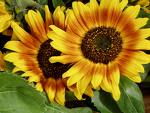
To celebrate the Summer Solstice, try working with the cheerful sunflower. Just as you’d expect, this flower has the planetary aspects of the Sun, and in the language of flowers it symbolizes success, fame and riches. Imagine a Sabbat celebration with golden candles and tall stems of yellow sunflowers arranged across the work area. Light the golden candles and turn to face the Sun. Announce out loud your goals for a successful life. Then repeat the following verse three times:

On this, the longest day and shortest night,
O work to bring my hopes and dreams to light.
Like a golden sunflower, I turn to face the Sun,
Grant me success and happiness, and let it harm none.

Allow the candles to burn in a safe place until they go out on their own. Let the sunflowers dry out and then let the birds have the seeds as a snack.

Ritual for Midsummer’s Eve

For Midsummer’s Eve, you could try your hand at fairy magic. Faeries love fragrant flowers like roses and blooming herbs. And don’t forget those ferns! Ferns are sacred to the fairy folk, and adding a few fern fronds to your Midsummer bouquets is a sure way to honor the power of the fairy kingdom. Daisies, yarrows and lavender should be blooming now, so put those blossoms together and weave a little flower fascination for good luck and prosperity in the coming year. Create a small flower bouquet and tie it together with pretty ribbons.
Now take the fairy bouquet and go to a place in nature, and repeat the following charm:

At this time of Midsummer’s Eve, the Fae are all around,
On this ancient day, it’s said, fairy magic shall be found.
This bouquet a;; wrapped in ferns, I offer you as a token,
Grant my request for good luck and health, as this charm is spoken.

Be sure to leave that little bouquet outdoors for the fairies. Allow nature to reclaim it.

Have a magical summer!!